If you need to install a new utility connection or renew an existing service line, the method you choose matters more than people expect. It’s not just about getting a pipe or duct from A to B. It’s about how much disruption you cause, how long the job takes, and how much reinstatement you’re left dealing with afterwards.
At CW Pipewise, we provide compact, fluid assisted mini directional drilling (a trenchless approach) for installing new pipes and cables without digging long open trenches. In some situations, that’s the obvious choice. In others, open trenching is still the simplest and most sensible option. This guide will help you understand where each method fits.
A quick definition of both methods
Directional drilling (trenchless)
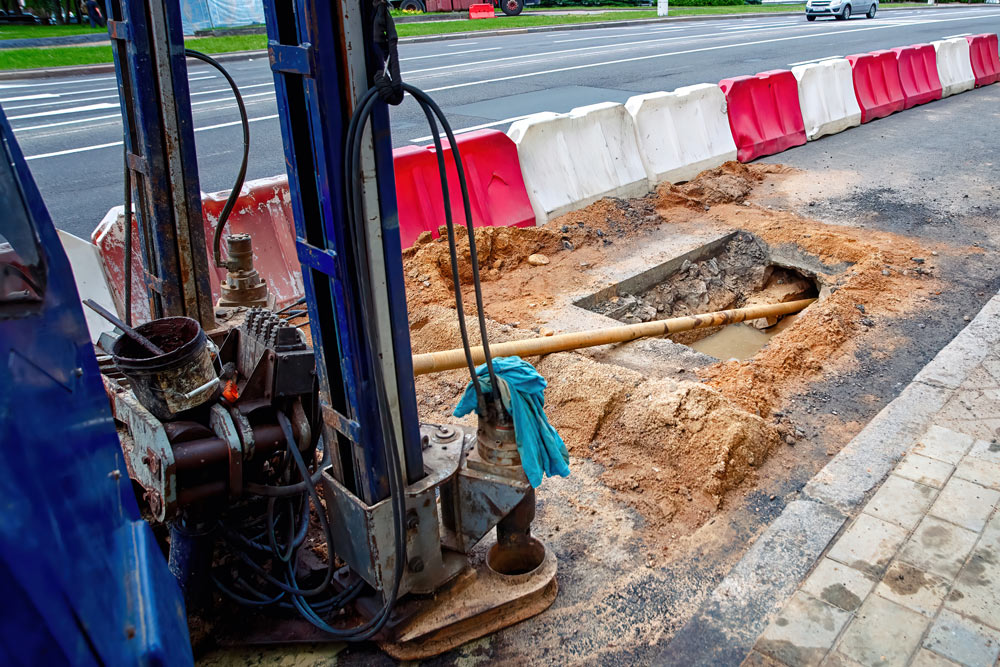
Directional drilling (often called HDD – horizontal directional drilling) installs pipes and ducts along a pre planned underground route. The process typically starts with a small launch pit, followed by a guided pilot bore drilled along the intended path. The new pipe or duct is then pulled back into place through the bore.
CW Pipewise uses compact, steerable mini HDD designed for house connections and small diameter utility lines such as gas, water, power, fibre broadband and sewage pressure mains. It can curve, change depth, and work through congested areas with existing services, while keeping surface disruption to a minimum.
Open trenching (traditional excavation)
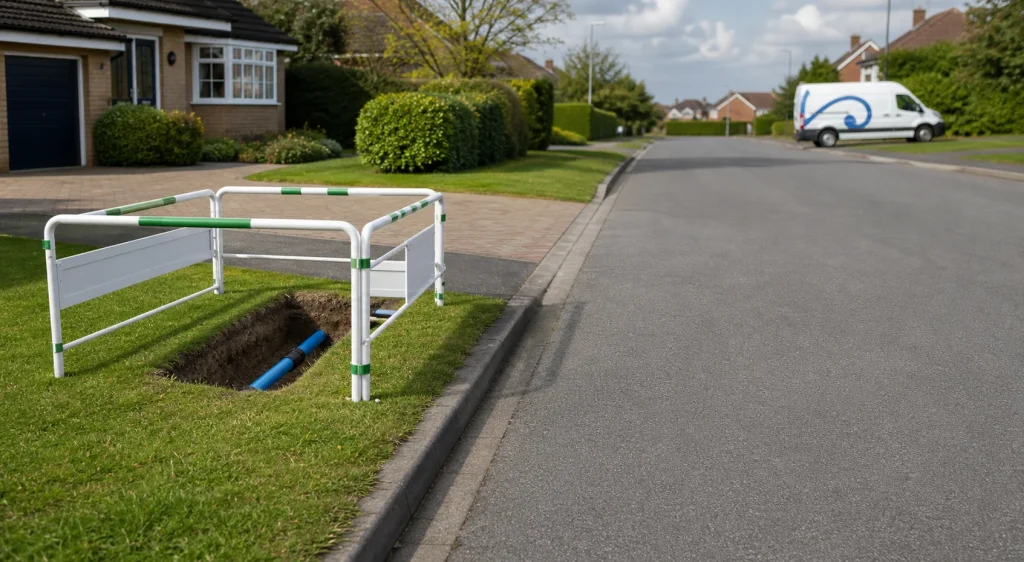
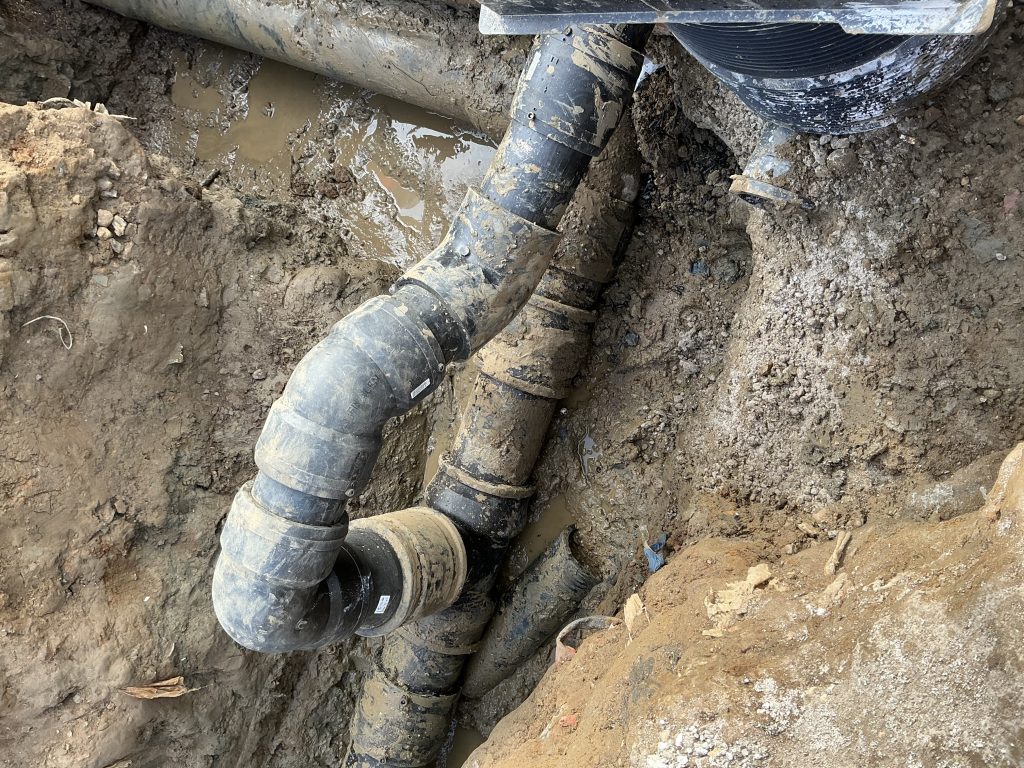
Open trenching is the more familiar method: excavate a trench along the full route, install the service, then backfill and reinstate. It’s direct, visible, and often cost effective for short runs where the surface is easy to restore.
When directional drilling makes sense
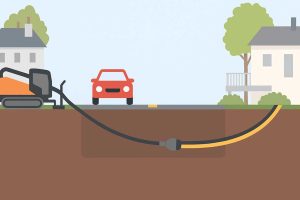 Directional drilling is usually the right call when a long trench would create more hassle than the service install itself. In practice, it tends to make the most sense in the situations below.
1) You want to minimise disruption at the surface
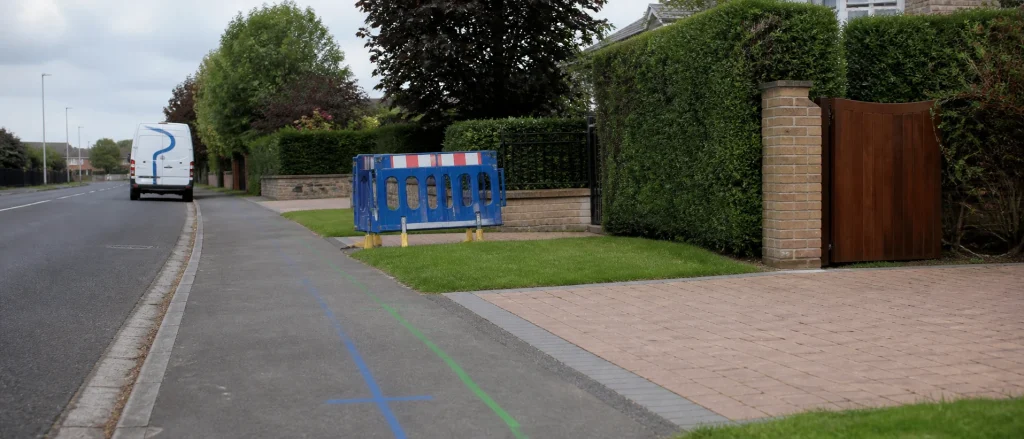
If the route crosses a driveway, patio, landscaped garden, or areas you actually want to keep intact, trenchless drilling can avoid tearing everything up. CW Pipewise typically works from small pits (often around pavement or garden size) rather than large excavations, which keeps spoil volumes down and speeds up reinstatement.
2) You need to cross beneath an obstacle
Short under crossings are a common reason people choose mini directional drilling. CW Pipewise can drill beneath streets, driveways, gardens, rail embankments, and small watercourses, delivering a controlled crossing without the mess and downtime of digging through (or closing) what’s above.
3) You need a clean install with less downtime
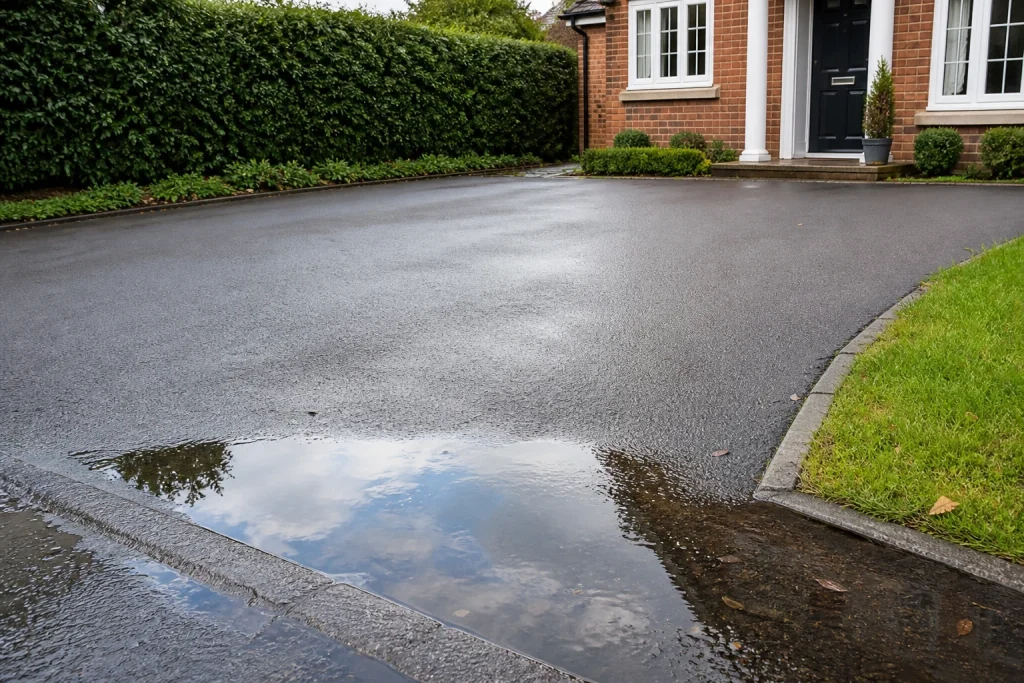
Directional drilling is often chosen when you want the finished result to be neat, tidy, and quick to reinstate. Because the drilling is precise and contained to launch and reception pits, the surface can usually be returned to a good standard with less disruption than a long open trench.
4) The route runs near roads, footpaths, verges, or waterways
Trenching along a busy roadside or footpath can be disruptive and may bring traffic management or access issues into play. CW Pipewise directional drilling is suited to parallel bores alongside roads, footpaths, or waterways, helping keep work contained and controlled.
5) The site is tight or built up
In built up locations, sometimes it’s not the drilling that’s difficult, it’s the space needed to excavate and manage spoil. CW Pipewise operates a compact, steerable mini HDD rig designed for tight locations and sensitive areas, where a larger machine may not fit.
6) Ground conditions are challenging or the area is congested with services
Mini HDD can be useful where you need to thread a route through existing buried networks. CW Pipewise uses a controlled drilling fluid (water, water polymer, or bentonite mix) to support the bore, transport cuttings, and reduce friction during pull back, helping achieve a smooth and stable installation in demanding soils.
When open trenching is still the better option
 Trenchless isn’t automatically the best option every time. There are plenty of jobs where open trenching is more practical, more straightforward, and sometimes simply the quickest way to get the work completed.
1) The run is short and the surface is easy to reinstate
If you’re digging across soil, turf, or an area already due to be landscaped, trenching can be the simplest solution. You can expose the route, install the service, and reinstate without worrying about protecting expensive finishes.
2) You need full visibility along the route
Trenching can be preferable where the job involves inspection, fault finding, or multiple connections along the line. If you need to see exactly what’s happening across the full route, a trench gives you direct access.
3) The site is already being opened up for other groundworks
If you’ve already got excavations planned for drainage, building works, or major landscaping, it can be efficient to install services in the same open trench while you’re at it.
4) The route or constraints make drilling less suitable
Directional drilling still needs the right set up and workable conditions. A proper assessment of the route, depth, and constraints will usually make it obvious whether trenchless is the sensible approach, or whether conventional excavation is likely to be cleaner and simpler overall.
Side by side: the real differences people notice
- Surface disruption: directional drilling limits excavation to small pits, while trenching opens the entire route.
- Spoil and mess: trenching creates more spoil to store and remove; mini HDD typically keeps spoil volumes down.
- Reinstatement: if you’re reinstating paving, driveways, or landscaping, trenching often means more making good.
- Access and downtime: trenchless installs often keep areas more usable during the work, depending on the site.
- Route complexity: CW Pipewise mini HDD can curve and change depth to follow a planned line and avoid existing utilities.
How CW Pipewise directional drilling works
If you’re leaning towards trenchless, it helps to understand what the job typically involves. CW Pipewise follows a controlled process designed to keep the installation accurate and the finish tidy.
1) Survey and planning
The route, existing buried services, and surface constraints are assessed. From there, the bore path is designed and the most suitable rig set up is chosen.
2) Launch and reception pits
Small pits are excavated at the start and finish points (or an intermediate pit if required). These are positioned to minimise impact while allowing safe operation.
3) Guided pilot bore
A steerable pilot bore is drilled along the planned route. A locating system monitors the drill head position and depth, allowing continuous adjustments to follow the design line and avoid existing utilities.
4) Bore enlargement (where needed)
For larger pipes, reamers are pulled through the pilot bore to open it to the required diameter. Drilling fluid helps carry spoil away and stabilise the hole.
5) Pipe pull back
The new pipe, duct, or cable protection is attached to the drill string and pulled smoothly back through the bore into its final position.
6) Connection and reinstatement
Once installed, the service is connected, tested, and commissioned. Launch and reception pits are reinstated to a high standard, leaving the surface neat and tidy.
A simple checklist to help you choose
Directional drilling is likely the better fit if:
- You need to cross beneath streets, driveways, patios, gardens, rail embankments, or small watercourses.
- You want to avoid digging long trenches through finished surfaces.
- You need a controlled installation with less mess and downtime.
- You’re working in a tight, built up location where large excavations would be difficult.
- The route needs to curve, change depth, or pass through congested services.
Open trenching may be better if:
- The route is short and reinstatement will be simple.
- You need full visibility along the route for investigation or multiple connection points.
- The area is already being excavated for other works.
Speak to CW Pipewise about the right approach
If you’re not sure which method is best, it usually comes down to the route, what sits above it, and how much disruption you can tolerate. If you need a trenchless solution for new utility connections, renewals of existing lines, or short crossings beneath obstacles, CW Pipewise mini horizontal directional drilling can deliver a clean, controlled installation with minimal surface disruption.
If you’d like a quote, get in touch and we’ll assess the route, talk through the options, and recommend the most practical way to get your new service installed.