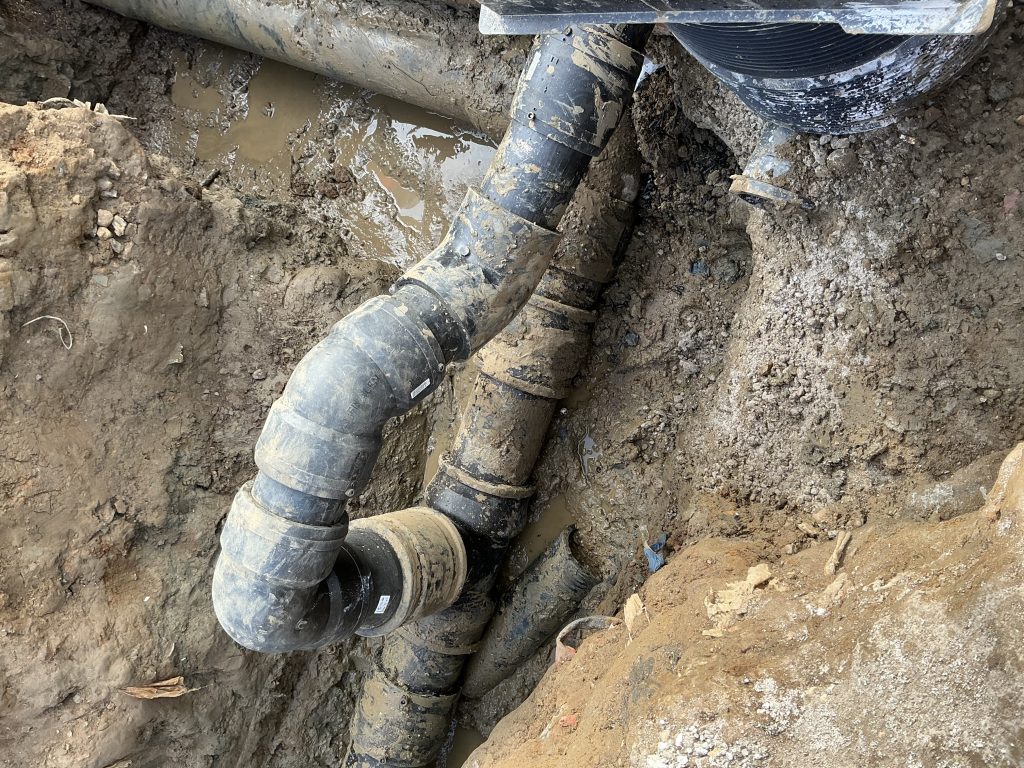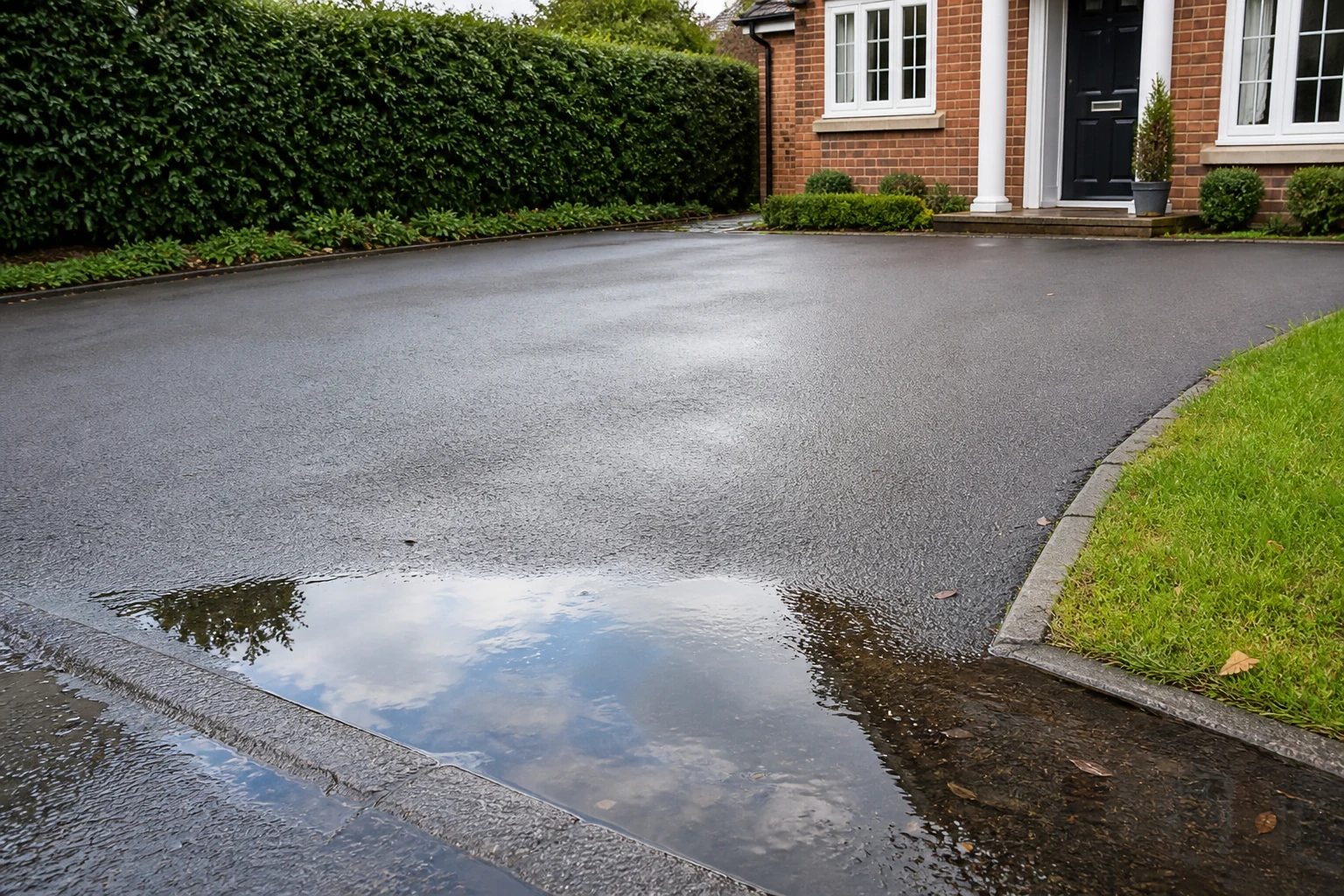
A driveway that keeps flooding after rain is more than an annoyance. Standing water can make the entrance to a property awkward to use, leave dirt across paved areas and, over time, put unnecessary pressure on nearby surfaces and drainage routes.
The cause is not always obvious from the puddle itself. Sometimes the paving is the problem. Sometimes the ground cannot absorb water quickly enough. In many cases, a correctly specified soakaway gives rainwater somewhere sensible to go.
Why water gathers on driveways after rain
Driveways flood when rainwater reaches the surface faster than it can drain away. That sounds simple, but several different faults can create the same result. A shallow puddle beside a kerb, a strip of water across the entrance or a wide wet patch near the house may each point to a different drainage issue.
The first thing to look at is the fall of the driveway. Paved surfaces should guide water towards a suitable drainage point, garden area or other approved outlet. If the surface is flat, uneven or slopes towards a low corner, water will naturally sit there after heavier rain.
Blocked channels are another common cause. Linear drains, gullies and surface gratings can fill with silt, leaves, grit and small stones. When that happens, water may look as though it has nowhere to go, even if a drainage route exists underneath.
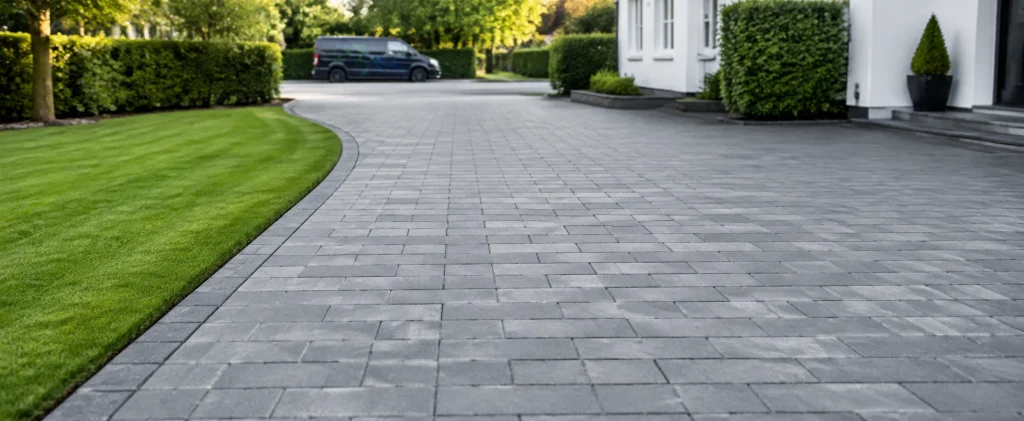
Driveway materials also matter. Some older paved areas were never designed for the amount of rainfall they now have to handle, especially where gardens have been replaced with hard surfaces. Impermeable paving sends most rainwater straight across the surface. If there is no working drain or soakaway to receive it, flooding becomes predictable.
Ground conditions play a part too. Heavy soil, compacted ground and areas with poor natural infiltration can slow water movement below the surface. In those cases, simply brushing water away or adding a shallow gravel strip will rarely solve the issue for long.
When a soakaway is the right kind of solution
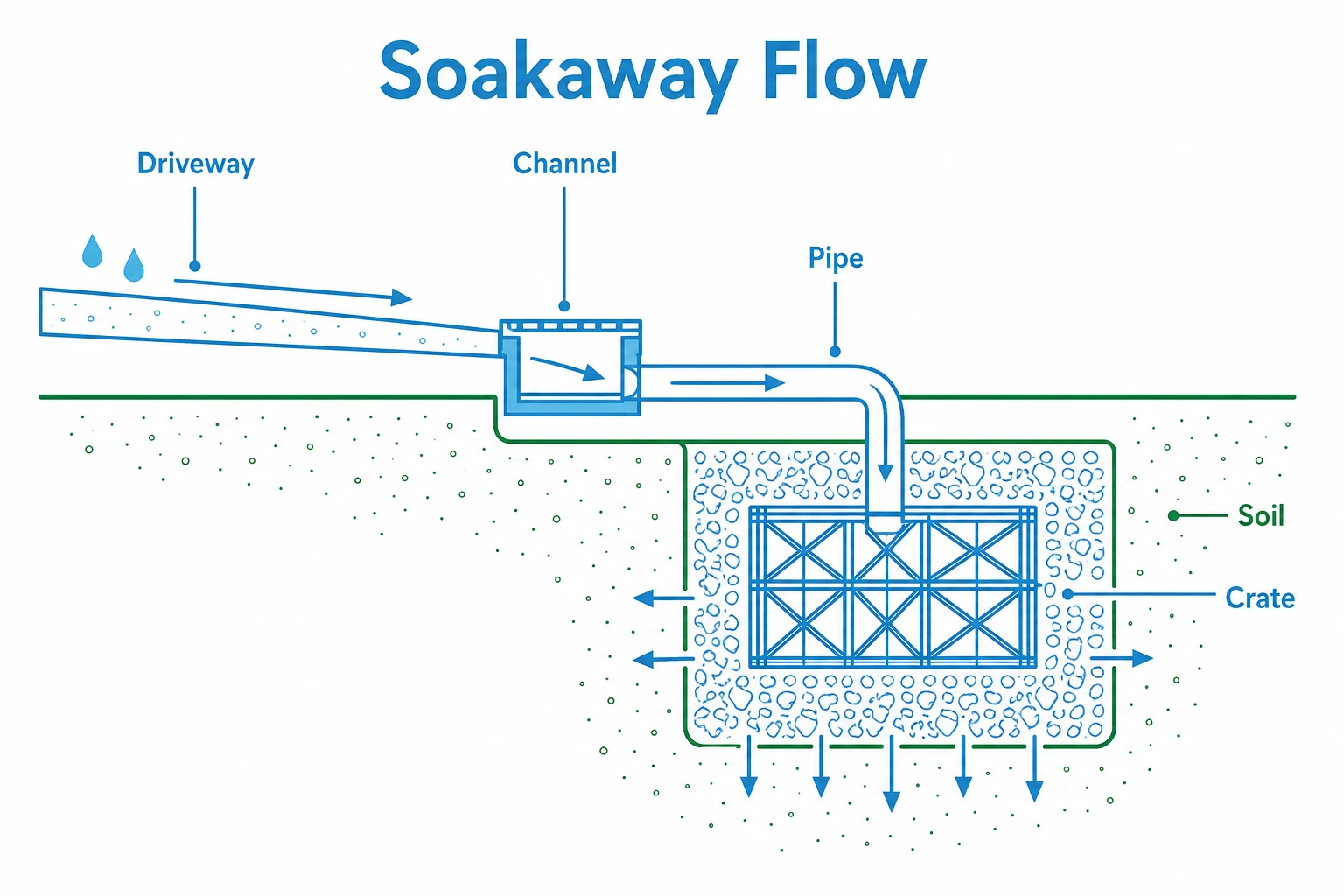
A soakaway is designed to collect surface water and allow it to disperse gradually into suitable ground. For driveways and small paved areas, it can be an effective way to manage rainwater without sending everything across paths, towards door thresholds or into areas that were not meant to carry it.
The key phrase is suitable ground. A soakaway works well only when the surrounding soil can absorb water at a reasonable rate and when there is enough space to place it correctly. It should be sized for the area it serves, the expected volume of water and the local ground conditions.
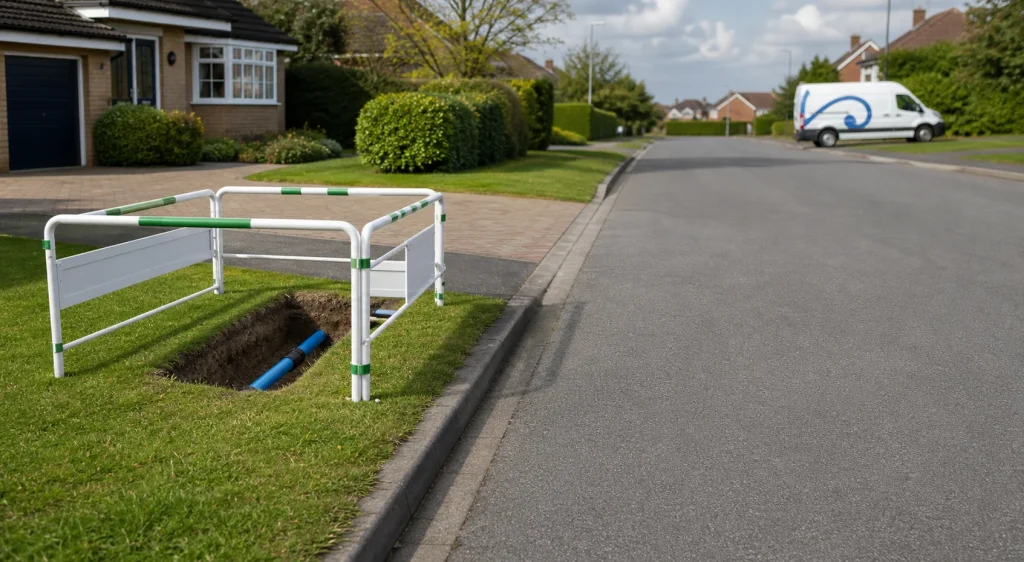
Good soakaway design is not just about digging a hole and filling it with stone. Modern systems often use crates wrapped in a suitable membrane, with pipework carrying water from gullies, channels or rainwater outlets into the soakaway. The layout should encourage controlled dispersal and reduce the chance of silt blocking the system.
This is why a proper assessment matters before installation. The paved area, existing drains, rainwater routes, soil behaviour and nearby structures all need to be considered. If the issue is genuinely surface water, professional soakaway installation can give that water a managed route away from the driveway.
A soakaway is not the answer to every wet driveway. If the water is coming from a leaking pipe, a damaged drain or runoff from another source, those problems need to be identified first. Installing drainage without checking the cause can leave the original fault untouched.
Signs the problem is drainage rather than a one off puddle
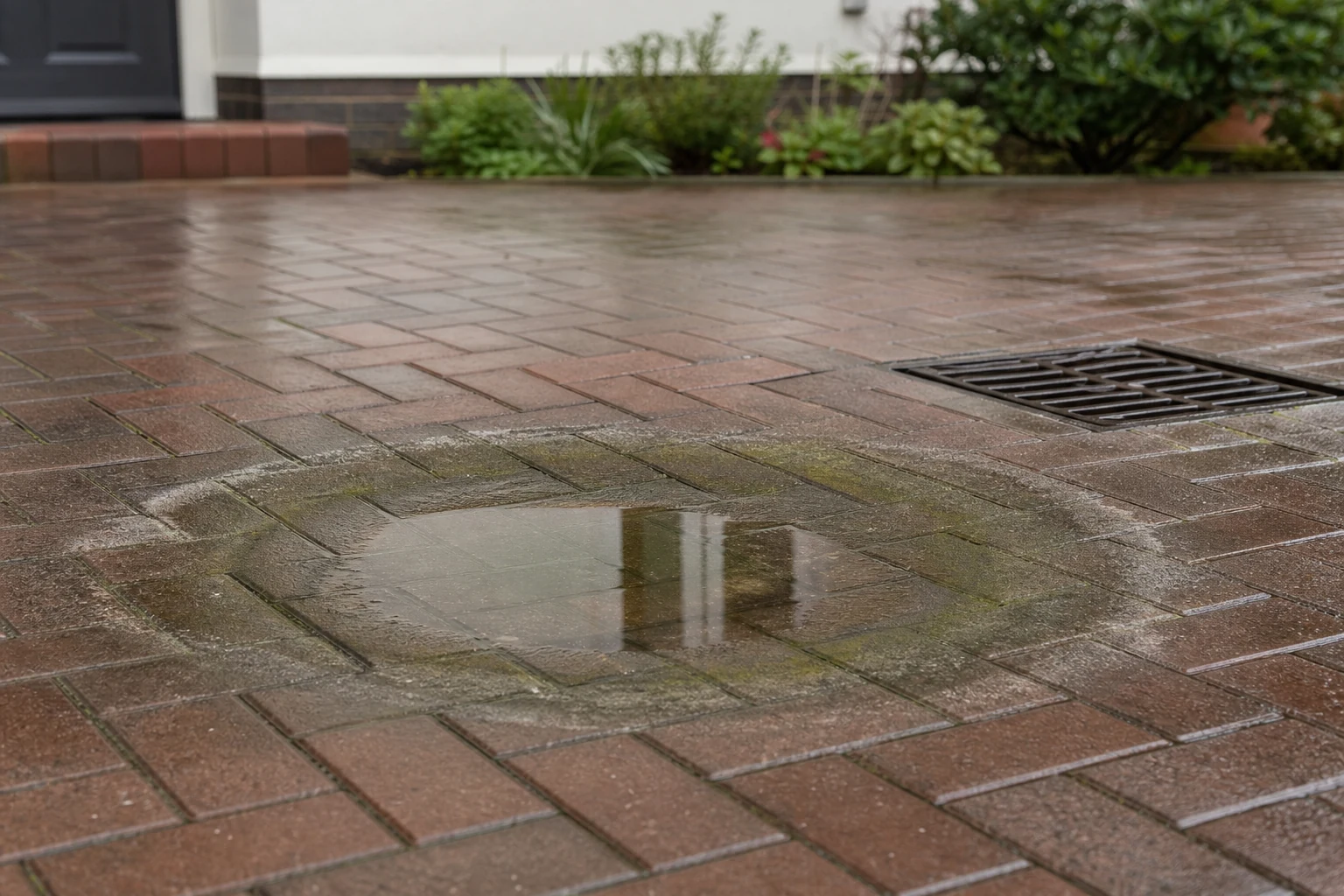
Most driveways will hold a little water during intense rainfall. That does not always mean there is a serious issue. The difference is what happens afterwards. If water remains long after the rain has stopped, or if the same patch floods every time, it is worth taking a closer look.
Recurring surface water often shows up in patterns. You may notice staining where water regularly sits, loose jointing sand between paving blocks, moss forming in the same low areas or small amounts of silt left behind after rainwater drains away. On tarmac or concrete, repeated pooling can make surface defects more noticeable.
Another clue is where the water travels. If rainwater runs towards the building, garage, boundary or a frequently used walkway, the driveway may not be controlling water in a practical way. Even if the flooding is shallow, the direction of travel matters.
It is also sensible to rule out leaks. Water that appears when there has been no rain, keeps returning in one spot or is accompanied by damp ground elsewhere may have another cause. CW Pipewise has a helpful guide to detecting early signs of water leaks, which is useful when the source of water is not clearly linked to rainfall.
If the issue only happens after rain and the water sits on or around hardstanding, the focus usually turns back to surface water drainage. That is where channels, gullies, pipe runs and soakaway capacity need to be checked as a complete system.
What proper soakaway planning should include
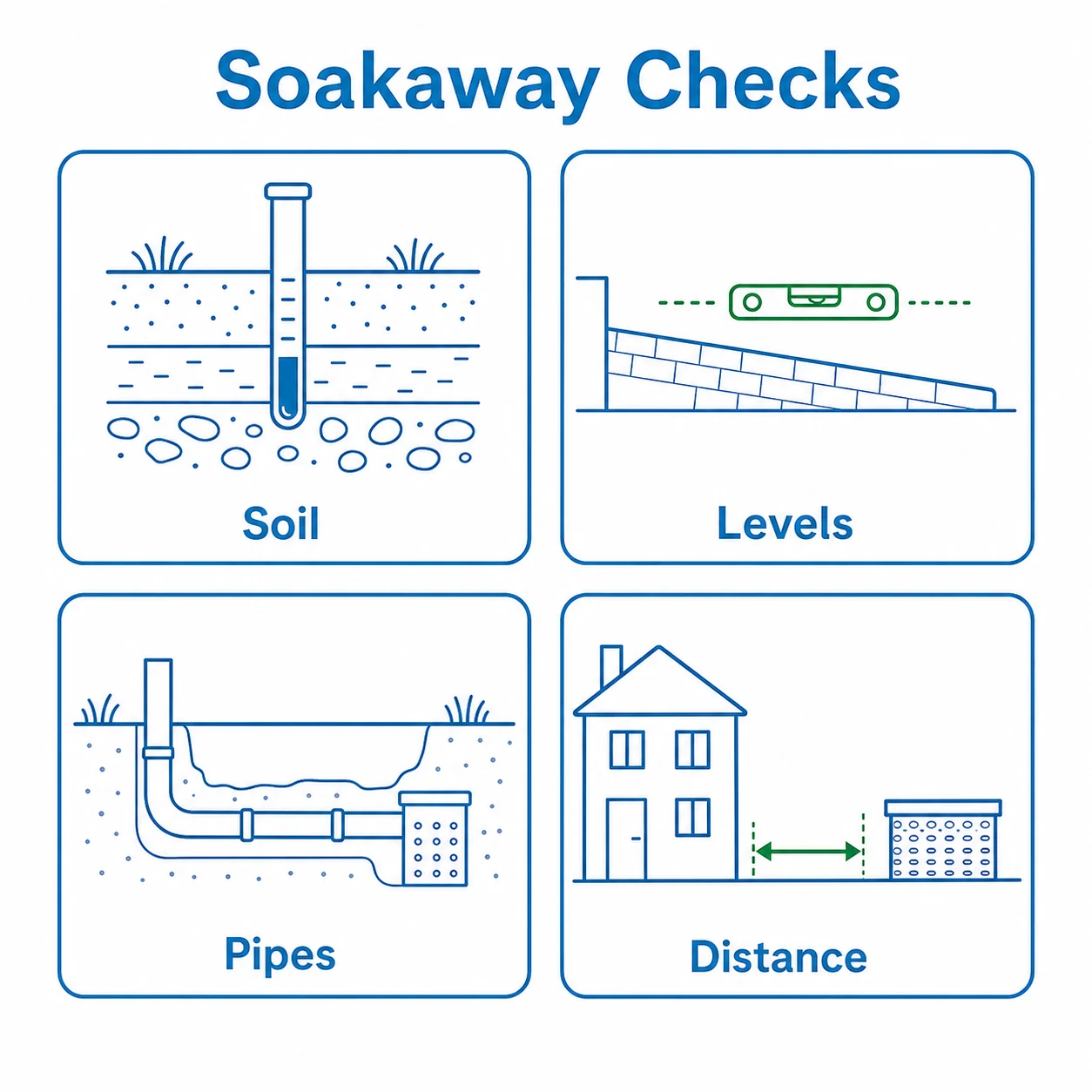
A useful soakaway starts with inspection, not guesswork. The installer should understand where the water is coming from, how much surface area is contributing to the flow and where the water can be taken without creating a new problem nearby.
One important step is checking whether the existing drainage is blocked, undersized or disconnected. A driveway might already have a channel drain, but if the outlet is blocked with silt or the pipework has failed, the visible symptom will still be flooding. Clearing or repairing the route may be part of the answer.
The next consideration is capacity. A soakaway needs enough storage volume to receive water during rainfall and release it gradually into the ground. Too small, and it may fill quickly. Poorly positioned, and it may fail to drain efficiently. The depth, width and construction method should suit the job rather than follow a generic approach.
Ground testing is also important. If the ground does not drain freely, the soakaway may need a different design or another drainage strategy. The aim is to manage water responsibly, not simply move it from one visible place to another.
Pipework should be laid with the correct gradient so water flows cleanly into the soakaway. Access for maintenance should also be considered, especially where silt could build up over time. A tidy installation is one that works now and remains serviceable later.
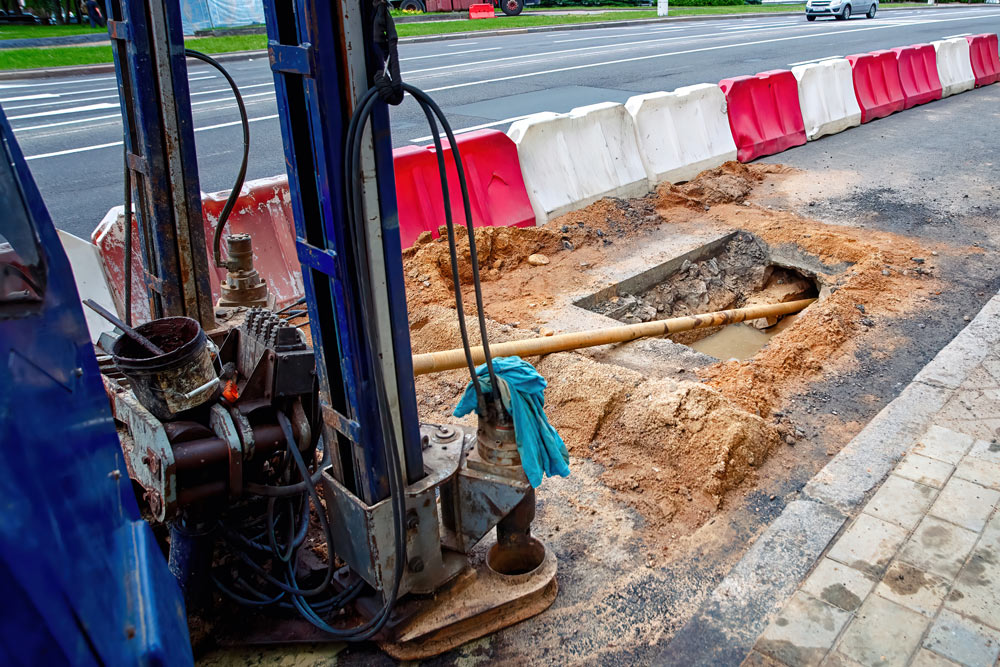
Where excavation is needed, good planning keeps disruption focused. On some projects, trenchless methods may help with installing or replacing underground services in a controlled way. For related underground pipework, CW Pipewise also explains its approach to moling and excavating.
How to reduce future driveway flooding
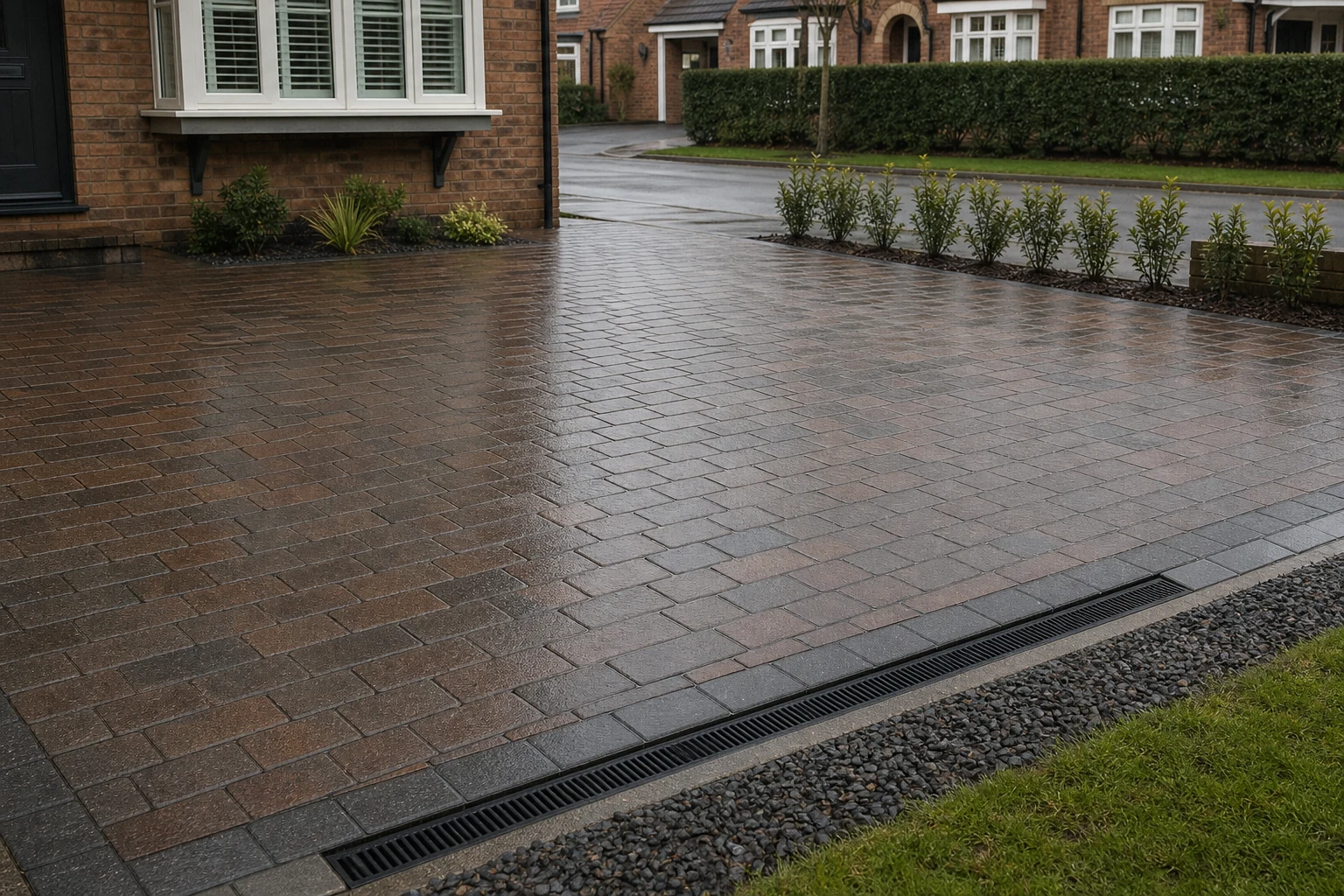
Once the main drainage problem has been corrected, a few practical habits can help keep surface water moving. Regularly clearing leaves, mud and debris from channel drains is one of the simplest. A drain that looks open at the top can still be partly blocked below the grate.
It also helps to watch what happens during heavy rain. You do not need to stand outside for long. A quick look can show whether water is reaching the drain, missing it completely or flowing from an unexpected direction. That observation is useful if you later ask a contractor to assess the problem.
Keep an eye on paving levels too. Blocks can settle, edges can drop and patched surfaces can change the way water moves. Even a small dip can become the lowest point that collects runoff from a much larger area.
If driveway work is being planned, drainage should be part of the design from the start. It is easier to include suitable channels, pipework and soakaway capacity before the surface is finished than to correct avoidable problems afterwards.
For existing driveways, the best route is usually a calm assessment of cause, capacity and condition. Surface water problems are often solvable when the drainage is matched to the site properly. If water is left to keep pooling, other issues can follow, much like the wider risks explained in the hidden cost of ignoring a small water leak.
- Driveway flooding usually happens because rainwater cannot leave the surface quickly enough.
- A soakaway can help when the ground is suitable and the system is sized correctly.
- Recurring puddles, silt marks and water flowing towards buildings are signs worth investigating.
- Leaks, blocked drains and poor falls should be ruled out before choosing the final fix.
- Good soakaway installation is planned around the surface area, ground conditions and maintenance access.
Frequently asked questions
Will a soakaway stop every driveway puddle?
Not always. A soakaway helps when the issue is surface water with a suitable route into ground that can absorb it. If the puddle is caused by a leak, blocked outlet or poor paving levels, those causes need to be dealt with too.
How do I know if my driveway needs a soakaway?
If water regularly gathers after rain and existing drains are not coping, a soakaway may be suitable. The driveway layout, surface area, pipe routes and ground conditions should be assessed before any installation is agreed.
Can a soakaway be added to an existing driveway?
Often, yes. The right approach depends on the driveway surface, available space and where water can be collected from. A contractor can check whether channels, gullies or pipework can be connected to a new soakaway.
Why does my driveway flood even though it has a drain?
The drain may be blocked, the outlet pipe may be restricted or the driveway may not fall towards the drain properly. In some cases, the drain works but has nowhere effective to discharge the water.
Need help understanding driveway drainage?
If rainwater keeps collecting around your driveway or paved area, CW Pipewise can assess the cause and explain the most practical drainage options clearly.