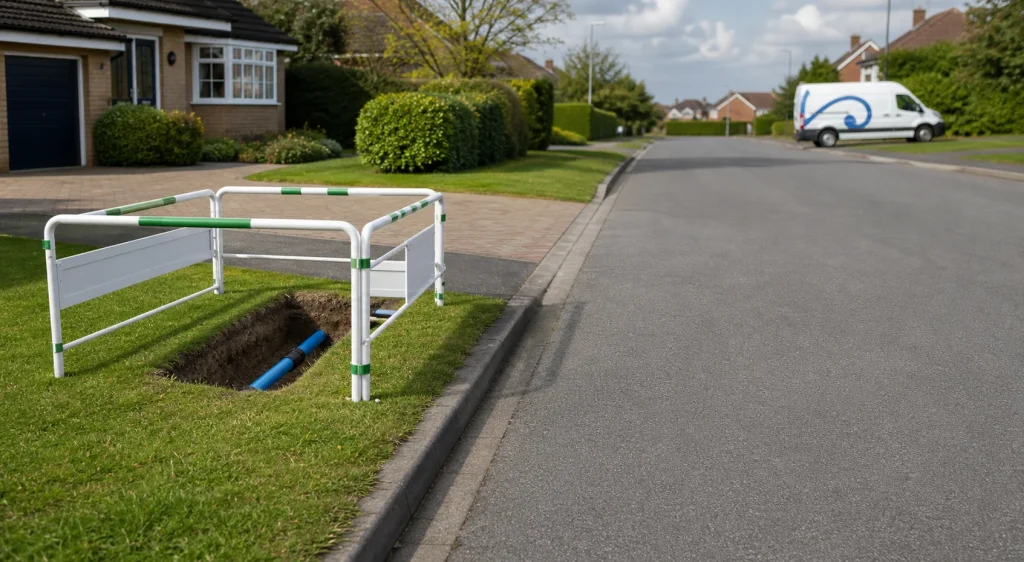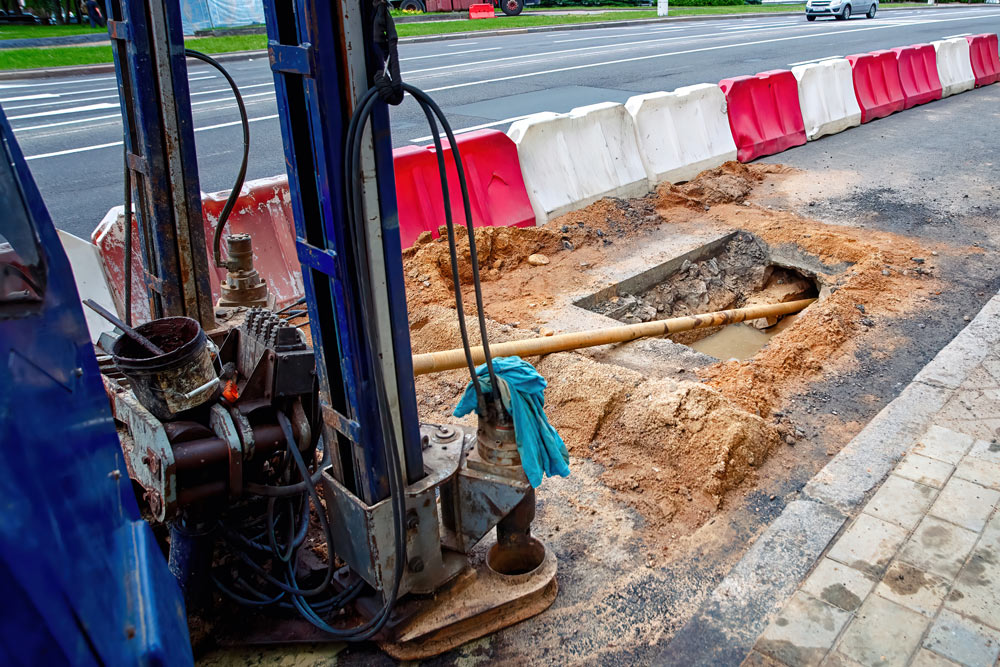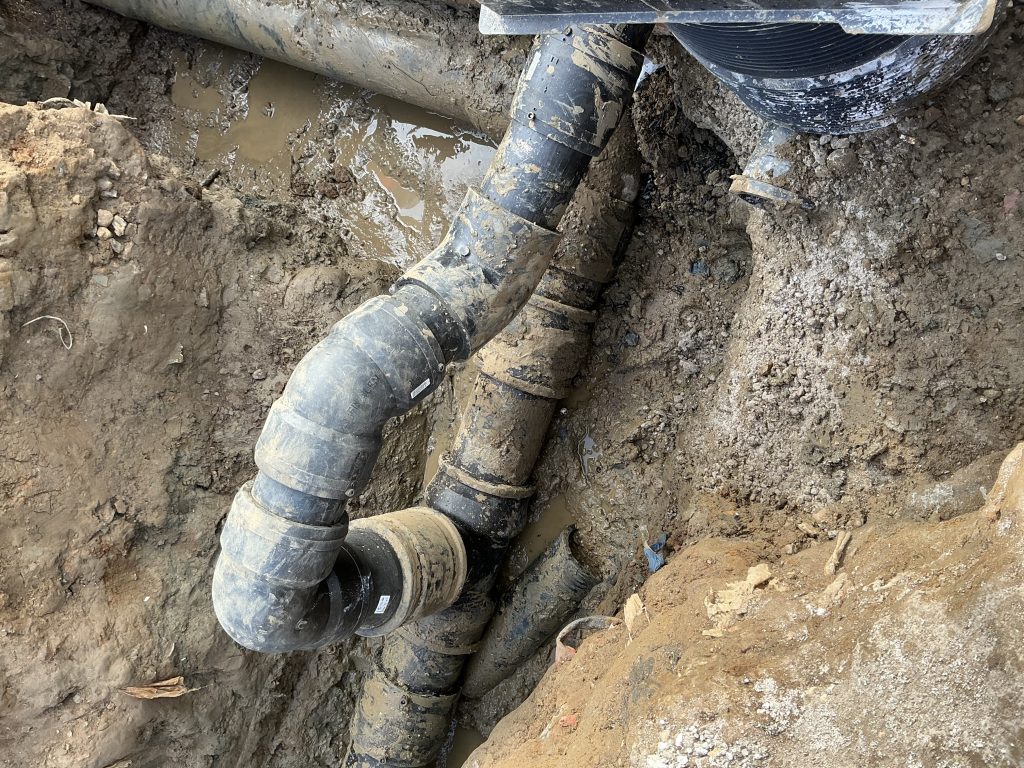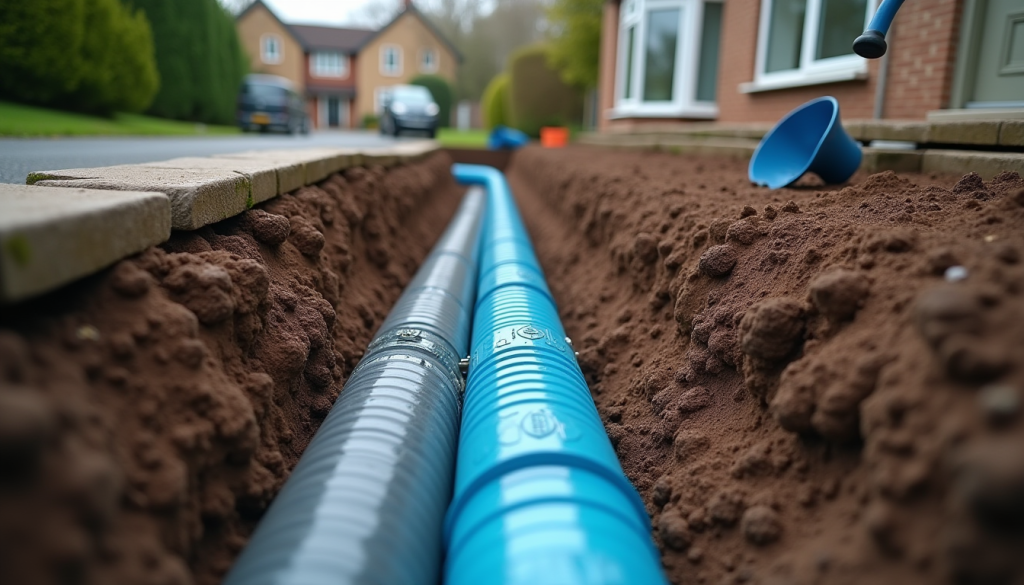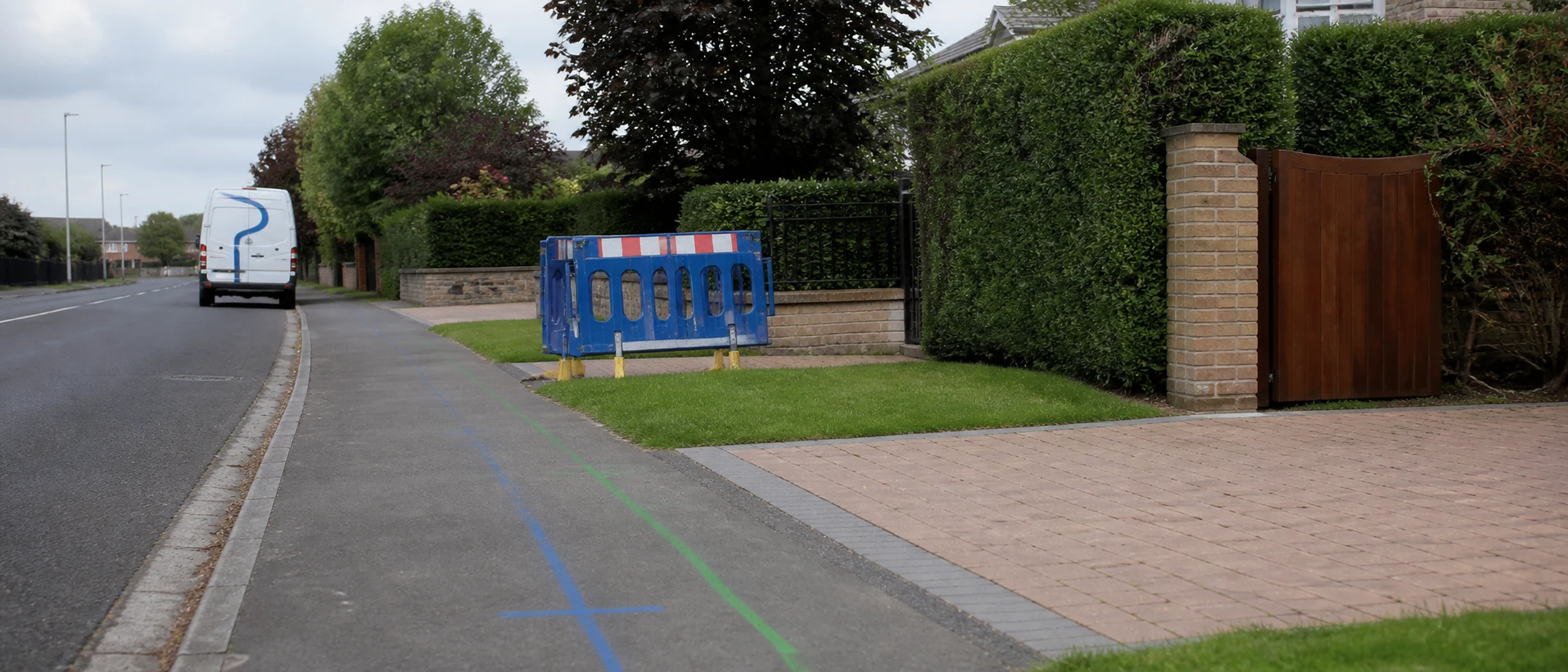
Before anyone opens the ground, there is one question worth answering properly: what is already buried there?
Unknown pipework, cables and ducts can change the safest route, the repair method, the plant needed and the order of work. Tracing helps turn guesswork into a clear plan before excavation, moling, drilling or pipe replacement begins.
Why buried pipework is not always where you expect
Buried services rarely tell the full story from the surface. A stop tap, inspection chamber, meter box or visible duct can give useful clues, but it does not prove the exact route, depth or condition of the pipework below.
Plans can also be incomplete. Older alterations, private connections, previous repairs, abandoned pipes and undocumented diversions may not appear on drawings. Even where drawings exist, they should usually be treated as a guide rather than a guarantee.
This matters because groundworks and trenchless methods both depend on knowing what is in the way. A direct excavation might look simple until it meets an unexpected cable. A trenchless bore may need a different launch point if another service crosses the route. A leaking supply pipe might run differently from the route everyone assumed.
That is where utility surveying and tracing becomes useful. It helps identify and mark buried services before the main work starts, so decisions can be based on evidence rather than assumptions.
Signs you should trace before you dig or drill
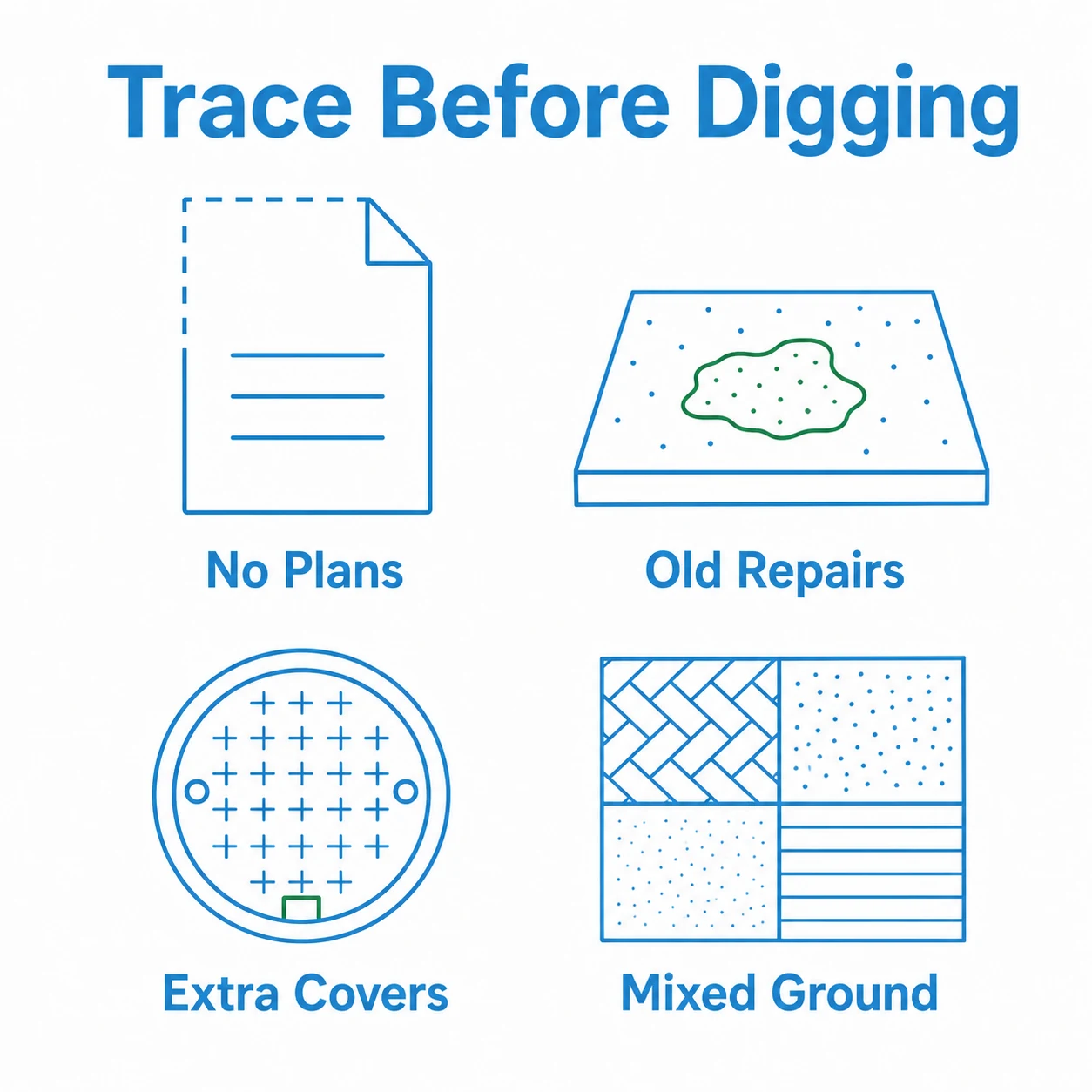
There are some situations where tracing is especially sensible. The first is any job where the route of a pipe is uncertain. If nobody can confidently explain where the service enters, where it changes direction, or where it connects, tracing should be considered before work begins.
Another sign is a site with multiple visible service points. Several covers, valves, meter positions, gullies or ducts can mean several buried routes share a small area. The risk is not just hitting a service. It is also choosing an installation route that becomes awkward later.
Tracing is also useful when the ground has been altered over time. Extensions, driveways, resurfacing, landscaping and previous repairs can all hide earlier pipe routes. Surface finishes can make old clues harder to read, especially where a pipe has been redirected to avoid a structure or previous obstruction.
You should also pause for tracing if the proposed work needs a clear service corridor. Directional drilling, moling, excavation and duct installation all benefit from knowing likely clashes in advance. For example, cable moling can be a tidy option for installing services with limited surface disruption, but it still needs a sensible route through the ground.
Finally, trace first if the consequences of disruption would be significant. A blocked access, interrupted supply, damaged cable or avoidable redesign can affect the whole job. A proper trace gives the team a better chance of planning the work cleanly from the start.
What tracing can help identify
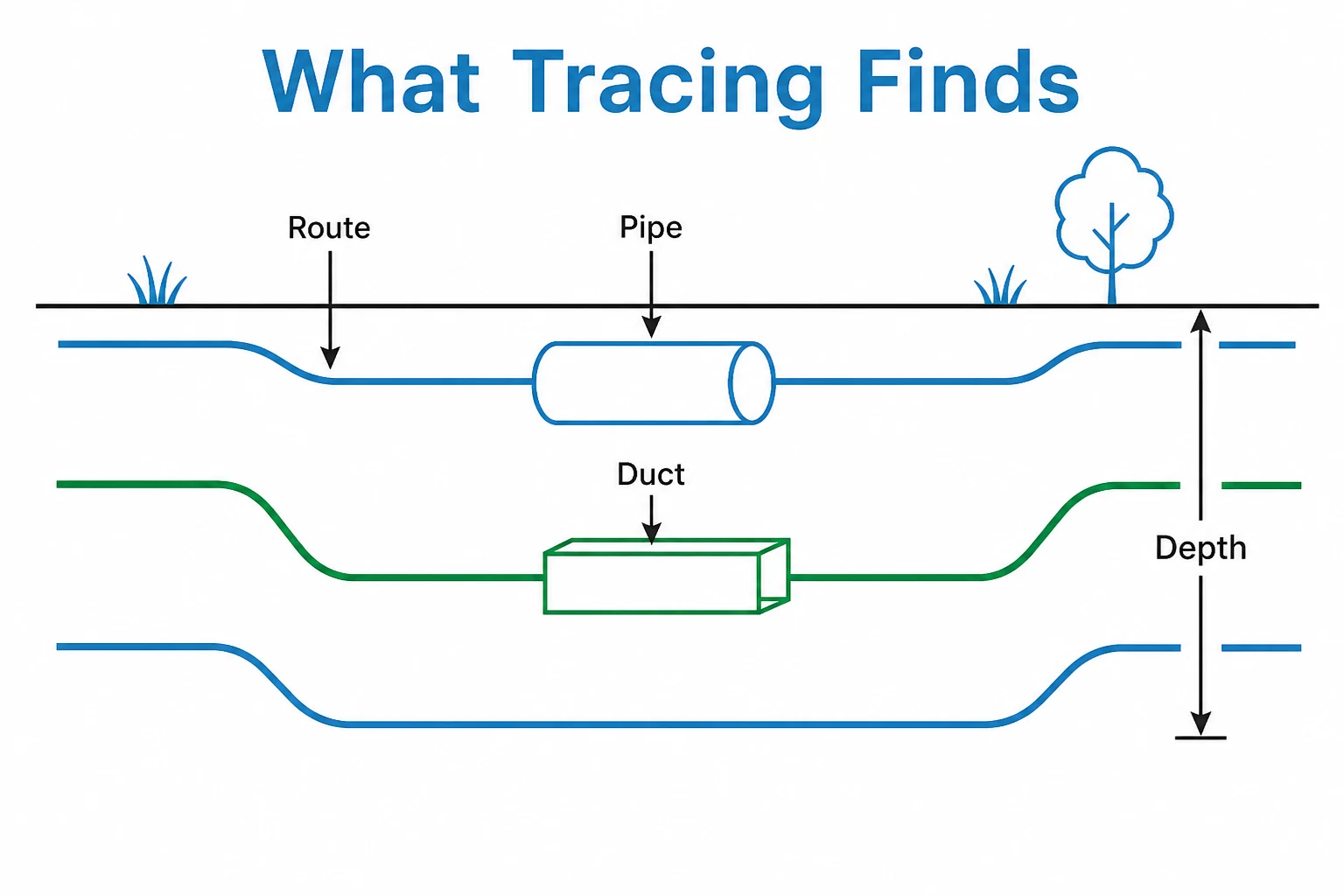
Tracing is not just about finding one pipe. It can help build a clearer picture of the buried service layout. Depending on the site and the type of service, this may include water pipes, drainage routes, ducts, cables, chambers, valves and other underground features.
Different tools may be used because different materials and site conditions behave differently. Some services can be detected with signal based equipment. Some routes may be confirmed through access points, chambers or connection points. Ground penetrating techniques may also help where the aim is to understand wider underground features.
The result is usually practical information rather than theory. The team wants to know where a service appears to run, how it may affect the planned works, and what areas need care. Markings, notes and site observations can then support the next stage.
Tracing can also reveal uncertainty. That might sound less satisfying than a neat answer, but it is still valuable. If a service cannot be confirmed in a certain area, the project team can allow for careful trial holes, a revised route, or a different repair approach. Knowing what is unknown is much better than pretending the risk is not there.
For pipe repair and installation work, tracing helps connect the survey stage with the practical method. It can inform where access is created, where plant is set up, how pipework is isolated, and whether trenchless or open work is the better fit.
When tracing changes the method of work
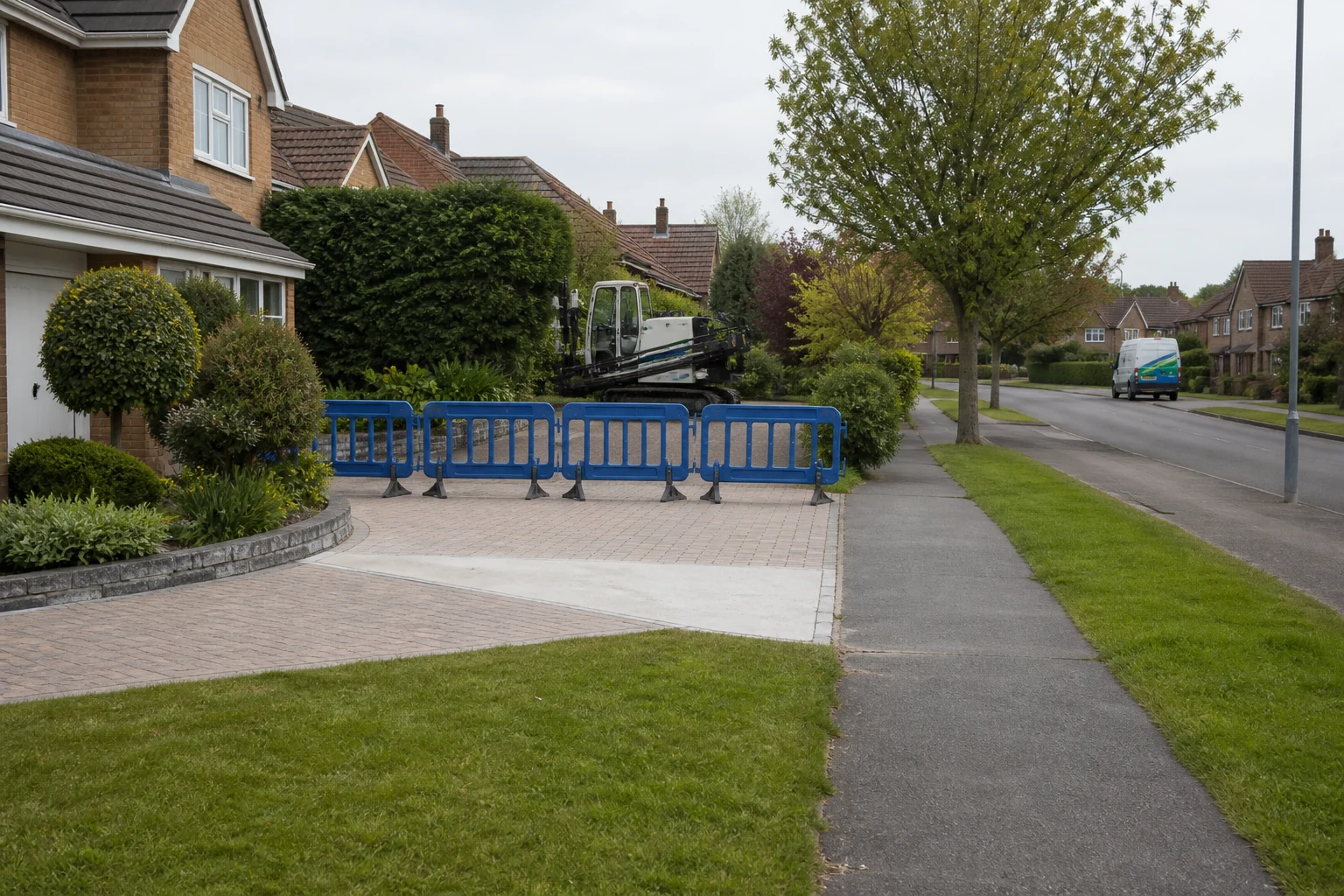
The most useful surveys do more than confirm a line on the ground. They help shape the method of work. If tracing shows a clear route with manageable obstructions, a trenchless installation may be suitable. If it reveals a tight cluster of services, a more controlled excavation may be the better first step.
For repairs, tracing may help locate the likely problem area before larger work begins. If a supply pipe, duct or drain is not where expected, the repair plan can be adjusted. That can reduce unnecessary digging and help the team focus on the right section.
For new installations, tracing can support route design. A good route is not only the shortest route. It needs to avoid known services, maintain suitable separation, allow practical access and suit the connection points at either end. When several utilities are involved, this planning becomes even more important. CW Pipewise can support wider multi utility installations where route planning and buried service awareness need to work together.
Tracing can also influence sequencing. A team may decide to expose a key crossing first, confirm a depth, protect an existing service, then continue with the main installation. That kind of order helps the job progress with fewer surprises.
The point is not to make the job more complicated. It is to choose the right level of information before committing to the main works. A clear trace can make the chosen method more confident, more controlled and better matched to the ground conditions.
What to gather before booking a trace

A useful tracing visit starts with good background information. You do not need to know everything, but any clues you can provide may help the surveyor build a faster and clearer picture.
Helpful information includes existing drawings, utility records, previous repair notes, photos from earlier works, details of known leaks or blockages, and the planned route of the proposed excavation or installation. If there are access covers, meter positions, valves or service entries, make sure they are accessible where possible.
It is also worth explaining the intended outcome. Tracing for a suspected leak may focus on a different question from tracing before a new duct run. Tracing before domestic and commercial groundworks may need to support a wider work area rather than one narrow route.
Be clear about any constraints too. Limited access, finished surfaces, shared service areas and working around occupied premises can all affect how the work is planned. A good tracing service will use those constraints to guide a practical approach.
After tracing, the next step should be a decision. Does the route still work? Is more investigation needed? Should the repair method change? Are there areas that need careful excavation? The value of tracing is strongest when the information is used to plan the work, not simply filed away.
Questions to ask before ground is broken
Before excavation or trenchless work begins, it helps to ask a few simple questions. Can the team identify the known services in the work area? Are there drawings, and have they been checked against what is visible on site? Are there signs of previous alterations? Is the proposed route clear enough for the chosen method?
It is also worth asking whether any service routes remain uncertain. If the answer is yes, the next question is whether that uncertainty matters. Sometimes it may be managed with careful digging. Sometimes it should be resolved with tracing first.
Ask how the tracing results will be used. A mark on the ground is helpful, but the real benefit comes when it informs access points, route selection, protection measures and the final method of work.
For property owners, facilities teams and contractors, the aim is the same: avoid unnecessary guesswork. Buried pipework can be complex, but the decision process does not have to be. If the route is unknown, congested, altered or important to the success of the job, tracing is usually the sensible first move.
- Trace buried pipework first when the route, depth or connection points are uncertain.
- Visible covers, valves and meters are useful clues, but they do not prove the full underground layout.
- Tracing can help choose between excavation, moling, drilling, repair or a revised route.
- The best tracing work supports a practical decision, not just a set of markings.
- Gather drawings, photos, access details and the planned work area before the survey.
Frequently asked questions
Do I need tracing if I already have utility drawings?
Often, yes. Drawings are useful background information, but they may be incomplete or out of date. Tracing helps compare records with what appears to be present on site.
Can tracing find every buried service?
No method can promise to find every service in every condition. Good tracing reduces uncertainty and highlights areas where extra care or further investigation may be needed.
Is tracing only needed before excavation?
No. It is also useful before trenchless installation, directional drilling, moling, pipe replacement and repair work where the buried route affects the method.
What should I do after the pipework has been traced?
Use the results to confirm the route, plan access, choose the right method and identify any areas that need careful investigation before the main work begins.
Plan the work with confidence
If buried services are uncertain, CW Pipewise can help trace the pipework and plan the next step with care.